Future of Real Estate in India: How Infrastructure, Connectivity & Economic Transformation Are Creating the Next Investment Cycle
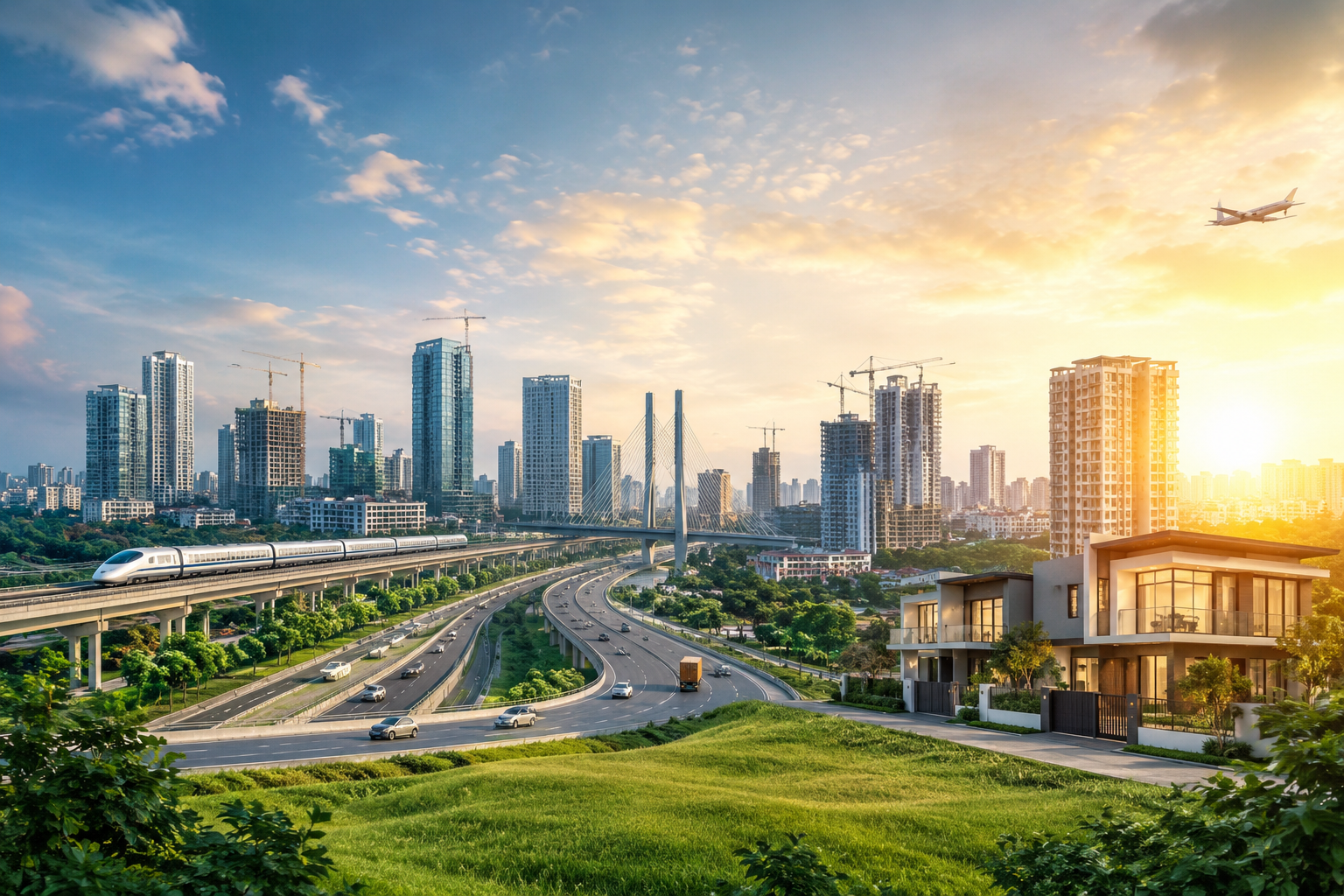
India is entering one of the most transformative infrastructure and economic growth phases in its modern history. From massive expressway networks and airport expansions to industrial corridors, smart cities, logistics hubs, and tourism infrastructure, the country is reshaping how people live, work, travel, and invest. This transformation is directly influencing the future of real estate in India, creating new investment corridors and redefining long-term wealth creation opportunities for investors.
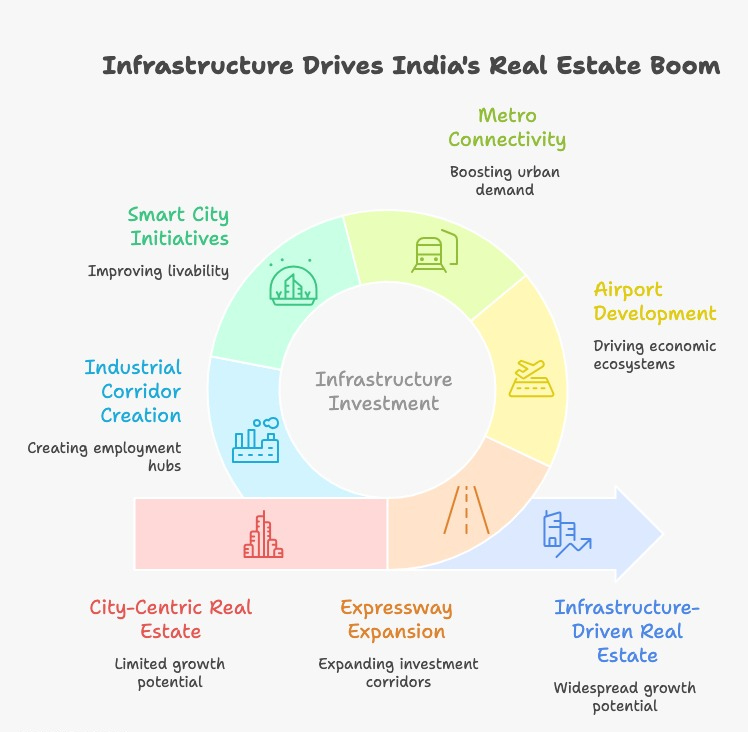
Unlike the previous decades, where real estate growth was concentrated in a few metropolitan cities, the current phase is far more diversified and infrastructure-driven. Today, the future of real estate in India is being shaped by connectivity, accessibility, industrial development, urban expansion, and government-backed economic planning. Infrastructure is no longer supporting real estate growth indirectly — it has become the primary catalyst behind property appreciation, rental demand, and investment migration.
According to the Government of India’s infrastructure development strategy under initiatives such as PM Gati Shakti, Bharatmala, Sagarmala, Smart Cities Mission, and Dedicated Freight Corridors, India is aggressively building a multi-modal connectivity ecosystem designed to improve logistics efficiency, industrialization, and urban growth.
At the same time, India’s economy continues to expand rapidly. Reports from Reserve Bank of India (RBI) and NITI Aayog indicate that urbanization, manufacturing growth, rising disposable incomes, and infrastructure investments will significantly influence the country’s long-term economic trajectory. This macroeconomic environment is creating entirely new possibilities within the future of real estate in India, especially for HNIs, NRIs, businessmen, institutional investors, bureaucrats, and strategic long-term investors.
The modern investor is no longer simply buying property in crowded city centers. Instead, investors are studying infrastructure maps, industrial corridors, airport influence zones, tourism belts, metro connectivity, and logistics hubs before making decisions. This shift is redefining the future of real estate in India, where infrastructure-backed assets are increasingly becoming more attractive than speculative urban investments.
Why Infrastructure Is Driving the Future of Real Estate in India
Historically, infrastructure development has always been one of the strongest indicators of long-term land appreciation. Roads, ports, airports, railways, industrial hubs, and metro systems increase economic activity, reduce travel time, improve accessibility, and attract commercial and residential demand.
Today, the future of real estate in India is closely linked with infrastructure-led development because infrastructure creates economic ecosystems rather than isolated growth pockets.
India’s infrastructure spending has increased substantially over the last few years. According to the Ministry of Road Transport & Highways, India has been expanding its highway and expressway network aggressively to improve national logistics efficiency and regional connectivity.
Infrastructure impacts real estate in multiple ways:
- Improved connectivity increases residential demand
- Commercial activity expands around transport corridors
- Rental demand rises near employment hubs
- Industrialization creates workforce migration
- Tourism infrastructure boosts hospitality and second-home demand
- Land parcels become strategic long-term assets
This is why the future of real estate in India is increasingly moving toward infrastructure corridors rather than saturated urban cores.
Expressways Are Reshaping the Future of Real Estate in India
India’s expressway revolution is creating entirely new investment geographies. Large-scale expressways are not just transportation projects; they are economic growth corridors that influence industrial activity, warehousing, commercial development, and residential demand.
Some of the major expressway projects influencing the future of real estate in India include:
- Delhi–Mumbai Expressway
- Yamuna Expressway
- Dwarka Expressway
- Ganga Expressway
- Samruddhi Mahamarg
- Bengaluru–Chennai Expressway
The National Highways Authority of India (NHAI) continues to accelerate highway connectivity projects under Bharatmala, which is expected to significantly improve logistics movement and regional economic integration.
The impact of expressways on the future of real estate in India is visible in several emerging corridors where property demand has increased due to improved connectivity. Expressways reduce commute time, improve freight transportation, and create commercial opportunities that eventually translate into higher residential and industrial demand.
The Yamuna Expressway region is one of the strongest examples. The development of Noida International Airport at Jewar, along with logistics hubs, industrial zones, data centers, and commercial activity, has significantly increased investor attention in the region.
Similarly, the Delhi–Mumbai Expressway is expected to influence multiple cities and peripheral zones across states including Haryana, Rajasthan, Gujarat, Maharashtra, and Madhya Pradesh. Investors are increasingly viewing infrastructure corridors as long-term land banking opportunities because the future of real estate in India is expected to be deeply linked with connectivity-led urban expansion.
Airport-Led Development and the Future of Real Estate in India
Airports have evolved beyond transportation infrastructure. They are now economic growth engines that influence hospitality, luxury housing, commercial leasing, logistics, tourism, and urban expansion.
Major airport developments currently influencing the future of real estate in India include:
- Noida International Airport (Jewar)
- Navi Mumbai International Airport
- Mopa Airport in Goa
- Hyderabad Airport expansion
- Tier-2 airport upgrades under the UDAN scheme
The Ministry of Civil Aviation and the UDAN Scheme are expanding regional air connectivity to support economic development across emerging cities.
Airport-led development directly impacts the future of real estate in India because airports create business activity, hospitality demand, tourism growth, and employment ecosystems. Areas around airports often witness growth in:
- Hotels and resorts
- Commercial office spaces
- Luxury residences
- Rental housing
- Warehousing and logistics
- Retail and entertainment infrastructure
The Jewar Airport corridor in NCR is a prime example of how airport infrastructure can influence real estate demand. Investors are already witnessing increasing interest in plotted developments, logistics parks, and premium residential projects around the region.
For NRIs and HNIs, airport connectivity is also becoming an important factor in second-home investments and luxury real estate decisions. As connectivity improves, the future of real estate in India is likely to witness increasing demand for premium lifestyle assets near well-connected infrastructure zones.
Metro Expansion and Smart Cities Are Transforming Urban Demand
Metro rail expansion is changing how Indian cities function. Transit-oriented development is becoming increasingly important in major urban centers.
Cities witnessing major metro expansion include:
- Delhi NCR
- Mumbai
- Bengaluru
- Hyderabad
- Pune
- Chennai
- Ahmedabad
- Nagpur
The Ministry of Housing and Urban Affairs continues to support metro expansion and smart urban infrastructure projects under the Smart Cities Mission.
Metro connectivity influences the future of real estate in India because modern homebuyers increasingly prioritize convenience, commute efficiency, and accessibility. Residential and commercial projects near metro stations often experience stronger rental demand and better long-term absorption.
Transit-oriented development is also encouraging mixed-use communities where residential, retail, and office infrastructure coexist around connectivity hubs.
The Smart Cities Mission is further improving urban infrastructure through investments in:
- Smart mobility
- Public transport
- Digital infrastructure
- Waste management
- Water systems
- Sustainable urban planning
As cities become more connected and technologically integrated, the future of real estate in India is expected to shift toward well-planned urban ecosystems rather than unstructured expansion.
Industrial Corridors and Manufacturing Growth
India’s manufacturing transformation is another major factor influencing the future of real estate in India.
Government initiatives such as:
- Make in India
- Production Linked Incentive (PLI)
- Dedicated Freight Corridors
- Delhi–Mumbai Industrial Corridor (DMIC)
- Chennai–Bengaluru Industrial Corridor
are creating industrial ecosystems that generate employment, migration, and housing demand.
The Department for Promotion of Industry and Internal Trade (DPIIT) and the Make in India Initiative continue to encourage manufacturing expansion and industrial investments across India.
Industrial growth impacts the future of real estate in India through:
- Workforce housing demand
- Warehousing expansion
- Commercial leasing
- Retail development
- Rental housing growth
- Logistics infrastructure
India’s warehousing and logistics sector has also emerged as a major real estate asset class. Reports from CBRE India and Colliers India highlight strong demand for Grade A warehouses, industrial parks, and logistics hubs due to e-commerce growth and supply chain modernization.
This industrial and logistics transformation is expected to play a major role in the future of real estate in India, especially in peripheral and emerging economic zones.
Tier-2 and Tier-3 Cities Are Becoming Investment Hotspots
One of the biggest trends influencing the future of real estate in India is the rise of Tier-2 and Tier-3 cities.
Cities such as:
- Lucknow
- Indore
- Surat
- Jaipur
- Coimbatore
- Kochi
- Nagpur
- Bhubaneswar
are gaining attention because of:
- Better infrastructure
- Industrial development
- Lower entry prices
- Urban migration
- Improved quality of life
- Smart city investments
According to urbanization studies from NITI Aayog, India’s urban population is expected to increase significantly over the next two decades. This urban transition is likely to expand demand beyond traditional metro cities.
The future of real estate in India will not be limited to Mumbai, Delhi, Bengaluru, or Hyderabad alone. Peripheral regions and emerging cities connected through infrastructure projects are expected to witness rising demand for:
- Plotted developments
- Integrated townships
- Commercial hubs
- Industrial housing
- Luxury villas
- Retail infrastructure
For long-term investors, emerging cities provide opportunities to enter infrastructure-led markets at relatively earlier stages of development.
Tourism and Hospitality Are Creating New Real Estate Opportunities
Tourism infrastructure is becoming another powerful force shaping the future of real estate in India.
Regions gaining attention include:
- Goa
- Konkan Belt
- Uttarakhand
- Himachal Pradesh
- Rajasthan
- Kerala
The Ministry of Tourism continues to promote tourism infrastructure and destination development across India.
Tourism-driven real estate demand includes:
- Luxury villas
- Boutique resorts
- Wellness retreats
- Vacation homes
- Farmhouses
- Branded residences
The pandemic also accelerated demand for low-density lifestyle living and experiential real estate. Wealthy investors increasingly seek assets that combine lifestyle value with long-term appreciation potential.
This trend is becoming an important part of the future of real estate in India, especially among HNIs and NRIs looking for:
- Second homes
- Passive rental income
- Wellness-focused investments
- Long-term wealth diversification
Goa and the Konkan region, in particular, have witnessed rising interest due to improved airport infrastructure, tourism growth, and premium lifestyle demand.
Why Land and Plotted Developments Are Regaining Importance
Land is once again emerging as a strategic asset class in the future of real estate in India.
Unlike built properties, strategically located land parcels offer:
- Long-term appreciation potential
- Lower maintenance costs
- Development flexibility
- Scarcity-driven value growth
- Infrastructure-linked appreciation
As infrastructure expands, peripheral land parcels near expressways, airports, industrial corridors, and tourism zones are increasingly attracting investor interest.
The future of real estate in India is likely to see stronger demand for:
- Gated plotted developments
- Farm communities
- Integrated townships
- Land banking opportunities
- Luxury plotted projects
Plotted developments are becoming especially attractive because modern buyers increasingly prefer flexibility, privacy, and low-density living environments.
Serious investors are now analyzing:
- Infrastructure maps
- Government planning zones
- Future economic activity
- Connectivity upgrades
before purchasing land assets.
Government Policies Supporting the Future of Real Estate in India
Government initiatives are playing a crucial role in shaping the future of real estate in India.
Key policy initiatives include:
- PM Gati Shakti
- Bharatmala Pariyojana
- Sagarmala Programme
- Smart Cities Mission
- RERA
- REIT Regulations by SEBI
These reforms are improving:
- Transparency
- Connectivity
- Institutional participation
- Investor confidence
- Urban planning
- Economic integration
RERA, in particular, significantly improved transparency and accountability within the Indian real estate sector. Institutional investors and global funds are increasingly participating in Indian real estate markets because of improved regulatory structures.
This policy ecosystem is strengthening the future of real estate in India by encouraging organized, infrastructure-backed, and long-term investment opportunities.
Future Investment Opportunities for Strategic Investors
The future of real estate in India is creating multiple opportunities across asset classes.
High-potential segments include:
- Luxury housing
- Industrial land
- Warehousing
- Logistics parks
- Vacation homes
- Hospitality assets
- Data centers
- Branded residences
- Plotted developments
Modern investors are no longer looking only at traditional residential apartments. Instead, they are evaluating broader economic and infrastructure ecosystems.
Key factors investors now analyze include:
- Connectivity
- Infrastructure growth
- Employment generation
- Tourism demand
- Industrial activity
- Rental potential
- Urban expansion
This strategic approach is becoming increasingly important because the future of real estate in India is expected to be driven more by economic ecosystems than speculative pricing alone.
FAQs
1. What is the future of real estate in India over the next 10 years?
The future of real estate in India is expected to be strongly driven by infrastructure development, economic expansion, industrial growth, smart cities, metro connectivity, and expressway-led urbanization. Government initiatives such as PM Gati Shakti, Bharatmala, and Smart Cities Mission are reshaping investment opportunities across residential, commercial, industrial, and land segments. Experts also expect Tier-2 and Tier-3 cities to play a major role in future property demand.
2. Why is infrastructure important for the future of real estate in India?
Infrastructure directly impacts connectivity, accessibility, employment generation, and economic activity, which influence property demand and land appreciation. The future of real estate in India is becoming infrastructure-led because expressways, airports, metro rail projects, industrial corridors, and logistics hubs create new investment corridors and expand urban boundaries. Projects under National Highways Authority of India (NHAI) and Ministry of Road Transport & Highways are significantly influencing emerging real estate markets.
3. Which cities have the strongest future real estate growth potential in India?
Several cities and emerging corridors are gaining attention due to infrastructure growth and economic expansion. Locations such as NCR, Mumbai Metropolitan Region, Bengaluru, Hyderabad, Pune, Lucknow, Indore, Surat, Jaipur, and Nagpur are considered important for the future of real estate in India because of metro expansion, industrial growth, airport connectivity, and smart city investments. Tier-2 and Tier-3 cities are also becoming attractive due to lower entry costs and rising infrastructure development.
4. How do expressways influence the future of real estate in India?
Expressways improve connectivity, reduce travel time, boost logistics efficiency, and create commercial and industrial activity around surrounding regions. This directly influences residential and land demand. The future of real estate in India is increasingly linked with projects like the Delhi-Mumbai Expressway, Yamuna Expressway, Dwarka Expressway, and Samruddhi Mahamarg. Infrastructure programs under Bharatmala Pariyojana are expected to create long-term investment opportunities across multiple states.
5. Is land investment a good option in the future of real estate in India?
Strategically located land parcels are becoming increasingly attractive because infrastructure-led development often creates long-term appreciation potential. The future of real estate in India is expected to see growing demand for plotted developments, integrated townships, and land banking opportunities near expressways, airports, industrial corridors, and tourism zones. Many investors prefer land because of its flexibility, lower maintenance requirements, and long-term scarcity value.
6. How are airports impacting the future of real estate in India?
Airports create economic ecosystems by increasing tourism, hospitality demand, commercial activity, and luxury housing growth. The future of real estate in India is being influenced by airport-led development projects such as Noida International Airport, Navi Mumbai International Airport, and Mopa Airport in Goa. The Ministry of Civil Aviation and UDAN Scheme continue to improve regional air connectivity, which is increasing real estate demand in emerging locations.
7. What role do smart cities play in the future of real estate in India?
Smart cities improve urban infrastructure through digital systems, public transport, sustainable planning, and improved civic services. The future of real estate in India is expected to benefit from smart city development because better urban infrastructure increases investor confidence, livability, rental demand, and long-term property absorption. The Smart Cities Mission is supporting infrastructure modernization across multiple Indian cities.
8. Why are Tier-2 and Tier-3 cities important for the future of real estate in India?
Tier-2 and Tier-3 cities are becoming increasingly important because they offer lower property entry costs, improving infrastructure, industrial growth, and rising urban migration. The future of real estate in India is expanding beyond major metros as investors look toward emerging cities with long-term development potential. According to NITI Aayog and urbanization studies, India’s urban population is expected to grow significantly, creating demand in smaller but rapidly developing cities.
9. How is industrial growth shaping the future of real estate in India?
Industrialization creates employment hubs, workforce migration, warehousing demand, and commercial activity. The future of real estate in India is being strongly influenced by initiatives such as Make in India, Dedicated Freight Corridors, and Production Linked Incentive (PLI) schemes. Industrial corridors like DMIC are encouraging investments in logistics parks, industrial land, workforce housing, and commercial infrastructure. Investors are increasingly tracking industrial development patterns before making long-term real estate decisions.
10. What should investors look for in the future of real estate in India?
Investors should focus on infrastructure connectivity, government-backed projects, economic activity, industrial expansion, tourism growth, and long-term urban planning. The future of real estate in India is expected to favor locations with strong infrastructure ecosystems rather than purely speculative growth. Investors often evaluate:
- Expressway connectivity
- Airport access
- Metro expansion
- Industrial development
- Tourism potential
- Rental demand
- Government planning initiatives
Research-backed investment decisions aligned with long-term infrastructure growth may offer stronger appreciation potential over time. For infrastructure-focused market insights and strategic opportunities, investors can explore TOTL Realty.
The Future of Real Estate in India Is Infrastructure-Led
India’s next decade of real estate growth will likely be defined by infrastructure connectivity, industrial expansion, tourism growth, logistics modernization, and planned urban development.
The future of real estate in India is moving toward:
- Transit-oriented development
- Corridor-based growth
- Integrated townships
- Industrial ecosystems
- Premium lifestyle investments
- Strategic land banking
For serious investors, understanding infrastructure trends is becoming just as important as analyzing property prices.
Expressways, airports, metro corridors, logistics hubs, industrial zones, and tourism circuits are no longer isolated projects — they are shaping the country’s next generation of wealth creation opportunities.
As India continues expanding its infrastructure network and economic capabilities, the future of real estate in India is expected to create significant opportunities for investors who focus on long-term fundamentals, strategic connectivity, and emerging growth corridors.
For premium investors seeking research-driven insights into infrastructure-led opportunities, TOTL Realty focuses on understanding emerging investment corridors, strategic land opportunities, and future-ready real estate markets aligned with India’s long-term economic transformation.