Marine Tourism in Sindhudurg: How Maharashtra’s Blue Economy Frontier Is Creating the Next Coastal Growth Corridor
Across the world, coastal regions have historically emerged as powerful centers of trade, tourism, economic activity, and long-term wealth creation. From the Mediterranean coast of Europe to Southeast Asia’s island economies, marine tourism has evolved beyond leisure travel to become a significant contributor to regional development, infrastructure investment, employment generation, and sustainable economic growth.
India, with a coastline stretching over 7,500 kilometers, possesses enormous untapped potential in marine and coastal tourism. In recent years, government agencies, policymakers, tourism authorities, and private investors have increasingly recognized the importance of the Blue Economy—a development model that leverages ocean-based resources and activities for sustainable economic growth. Among the many coastal destinations gaining attention, Marine Tourism in Sindhudurg is emerging as one of Maharashtra’s most promising growth stories.
Located along the scenic Konkan coastline, Sindhudurg offers a unique combination of natural beauty, maritime heritage, marine biodiversity, adventure tourism opportunities, and improving infrastructure connectivity. Unlike highly commercialized coastal destinations, the district still retains much of its ecological character and authentic coastal identity, making it increasingly relevant for travelers, policymakers, hospitality operators, and long-term investors alike.
Today, Marine Tourism in Sindhudurg is no longer limited to beaches and recreational activities. It has become an important economic driver influencing infrastructure development, local entrepreneurship, hospitality expansion, employment generation, and regional investment prospects. As major projects such as the INS Guldar underwater tourism initiative, airport connectivity enhancements, and coastal infrastructure improvements gain momentum, Sindhudurg is positioning itself as a significant contributor to Maharashtra’s tourism economy.
This article explores the evolution, opportunities, economic significance, sustainability considerations, and long-term growth potential of Marine Tourism in Sindhudurg, while examining why the district is increasingly being viewed as an important component of India’s emerging Blue Economy landscape.
Understanding Marine Tourism and the Blue Economy
Marine tourism refers to tourism activities that take place in coastal, marine, and ocean environments. These activities typically include beach tourism, scuba diving, snorkeling, recreational boating, dolphin watching, coastal heritage tourism, water sports, eco-tourism, and marine wildlife experiences.
Globally, marine tourism has become one of the fastest-growing segments of the tourism industry. According to the United Nations World Tourism Organization (UN Tourism), coastal and marine destinations account for a substantial share of global tourism activity and contribute significantly to employment and economic output in many countries.
The concept of the Blue Economy has further expanded the importance of marine tourism. According to NITI Aayog’s Blue Economy Framework, ocean-based industries such as tourism, fisheries, shipping, marine biotechnology, and coastal development have the potential to drive sustainable economic growth while preserving ecological resources.
Within this framework, Marine Tourism in Sindhudurg represents a practical example of how tourism can support regional economic development while encouraging responsible environmental stewardship.
Sindhudurg: Maharashtra’s Emerging Marine Tourism Destination
Situated in southern Maharashtra and bordering Goa, Sindhudurg enjoys a strategic geographic position along the Arabian Sea. The district is known for its approximately 122-kilometer coastline, which includes beaches, estuaries, backwaters, islands, coral habitats, and historically significant coastal landmarks.
The district derives its name from the iconic Sindhudurg Fort, a sea fort constructed by Chhatrapati Shivaji Maharaj in the 17th century. The fort remains one of India’s most important maritime heritage structures and continues to attract visitors interested in history, architecture, and naval heritage.
What distinguishes Marine Tourism in Sindhudurg is the diversity of experiences available within a relatively compact geographical area. Visitors can explore pristine beaches, participate in scuba diving activities, experience river estuaries, observe marine biodiversity, visit coastal heritage sites, and engage with local fishing communities that continue to play an important role in the district’s economy.
According to the Maharashtra Tourism Development Corporation (MTDC) and the Maharashtra Tourism Department, Sindhudurg is among the state’s most important coastal tourism regions and has witnessed increasing visitor interest over the past decade.
The Evolution of Marine Tourism in Sindhudurg
The development of Marine Tourism in Sindhudurg has occurred gradually over several decades.
Historically, the district’s economy was largely dependent on agriculture, horticulture, fishing, and small-scale trade. While coastal attractions existed, tourism infrastructure remained limited for much of the twentieth century.
The early stages of tourism development were primarily centered around:
- Heritage tourism
- Religious tourism
- Beach visitation
- Regional travel
However, the emergence of adventure tourism in the early 2000s transformed the district’s tourism profile.
One of the most significant milestones was the development of scuba diving infrastructure in Tarkarli. The establishment of organized diving facilities introduced a completely new tourism segment that differentiated Sindhudurg from many other coastal destinations in Maharashtra.
Over time, water sports, snorkeling, boating experiences, dolphin safaris, and eco-tourism initiatives expanded the range of activities available to visitors. As awareness increased, Marine Tourism in Sindhudurg began attracting travelers from Mumbai, Pune, Bengaluru, Hyderabad, and other major urban centers.
The growth of digital travel platforms, social media visibility, and improved transportation networks further accelerated visitor interest in the region.
Major Attractions Driving Marine Tourism in Sindhudurg
Tarkarli: Maharashtra’s Scuba Diving Hub
Among all destinations associated with Marine Tourism in Sindhudurg, Tarkarli occupies a particularly important position.
Recognized as one of Maharashtra’s premier scuba diving destinations, Tarkarli is known for its clear waters, underwater visibility, and marine biodiversity. The area hosts training programs, recreational dives, and introductory experiences for both beginners and certified divers.
The presence of the Indian Institute of Scuba Diving and Aquatic Sports has strengthened the district’s reputation as an adventure tourism destination. Additional information can be accessed through the MTDC Aquatic Sports Division.
For many visitors, scuba diving serves as their first direct interaction with the marine ecosystem, contributing to greater awareness of ocean conservation and marine biodiversity.
Devbag and the Karli River Estuary
Another important attraction supporting Marine Tourism in Sindhudurg is Devbag, where the Karli River meets the Arabian Sea.
Estuarine ecosystems such as this are ecologically significant because they support diverse marine and bird species while creating unique tourism experiences.
Popular activities include:
- Boat rides
- Dolphin spotting
- Backwater exploration
- Birdwatching
- Sunset cruises
These experiences appeal to travelers seeking nature-based tourism rather than purely recreational beach activities.
Vengurla and the Coastal Landscape
Vengurla has increasingly attracted attention for its scenic coastline, beaches, and strategic location near Goa.
The region’s coastal environment reflects the broader appeal of Marine Tourism in Sindhudurg, where visitors can experience relatively less crowded beaches while remaining connected to major transportation networks.
Its location along the Konkan coast also places it within an emerging tourism corridor benefiting from improved regional connectivity and growing visitor interest in coastal destinations.
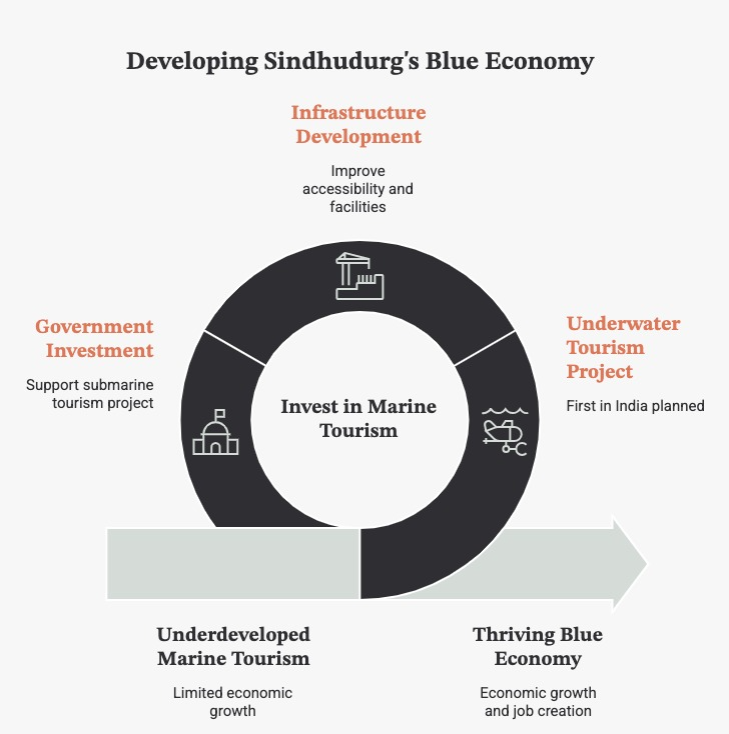
Infrastructure Development Supporting Marine Tourism Growth
Tourism growth is closely linked to infrastructure development, and this relationship is particularly visible in the evolution of Marine Tourism in Sindhudurg.
Over the past several years, improvements in transportation infrastructure have significantly enhanced accessibility to the district.
Sindhudurg Airport
The operationalization of Sindhudurg Airport has reduced travel times and improved access for domestic travelers. Enhanced air connectivity often acts as a catalyst for tourism growth by reducing barriers to travel and encouraging private investment in hospitality infrastructure.
Mopa International Airport
The development of Manohar International Airport has further strengthened the region’s accessibility.
Located within driving distance of Sindhudurg’s tourism belt, the airport improves connectivity for both domestic and international travelers, increasing the potential catchment area for coastal tourism experiences.
Mumbai-Goa Highway Improvements
Transportation experts frequently identify road infrastructure as a critical factor influencing tourism development.
Ongoing upgrades along National Highway 66 are expected to improve travel efficiency between major urban centers and the Konkan region. Better road connectivity typically supports tourism growth by facilitating easier movement of travelers, goods, and services.
As infrastructure improves, destinations associated with Marine Tourism in Sindhudurg are likely to become more accessible to a broader visitor base, supporting local economic activity and tourism-related enterprises.
FAQs
1. What makes Marine Tourism in Sindhudurg different from other coastal destinations in India?
Marine Tourism in Sindhudurg offers a unique combination of marine biodiversity, adventure tourism, maritime heritage, and relatively untouched coastal landscapes. Unlike many mature tourism destinations that have undergone extensive commercialization, Sindhudurg still retains much of its natural character while steadily developing tourism infrastructure. Visitors can experience scuba diving, dolphin safaris, estuary tourism, water sports, historic sea forts, and coastal ecosystems within a single region.
According to the Maharashtra Tourism Department, the district’s extensive coastline, coral habitats, and marine heritage make it one of Maharashtra’s most significant coastal tourism destinations.
2. Why is Marine Tourism in Sindhudurg becoming increasingly important for Maharashtra’s tourism economy?
Marine Tourism in Sindhudurg is contributing to the diversification of Maharashtra’s tourism sector by expanding beyond traditional urban and heritage tourism markets. The district supports tourism-related employment, hospitality development, local entrepreneurship, transportation services, and recreational industries.
The growing focus on India’s Blue Economy strategy has further increased attention on coastal regions capable of generating sustainable economic growth through marine-based activities. The framework outlined by NITI Aayog’s Blue Economy initiative recognizes tourism as an important component of ocean-based economic development.
3. What are the major attractions supporting Marine Tourism in Sindhudurg?
Several attractions contribute to the growth of Marine Tourism in Sindhudurg, including:
- Tarkarli Beach
- Devbag Beach
- Vengurla Coastline
- Nivati Beach
- Shiroda Beach
- Karli River Estuary
- Dolphin Watching Tours
- Water Sports Activities
- Scuba Diving Experiences
- Sindhudurg Fort
Among these, Sindhudurg Fort remains one of India’s most significant maritime heritage attractions, while Tarkarli has emerged as Maharashtra’s leading scuba diving destination.
More details are available through the MTDC Tourism Portal.
4. Is scuba diving a major component of Marine Tourism in Sindhudurg?
Yes. Scuba diving is one of the most important adventure tourism activities supporting Marine Tourism in Sindhudurg. The district is home to organized diving facilities and training programs that attract both beginner and certified divers.
The Indian Institute of Scuba Diving and Aquatic Sports has played a significant role in establishing Tarkarli as a recognized diving destination. Scuba diving experiences allow visitors to explore marine ecosystems while creating awareness about ocean conservation and underwater biodiversity.
Learn more through the Indian Institute of Scuba Diving and Aquatic Sports (IISDA).
5. What is the INS Guldar underwater tourism project and how could it impact Marine Tourism in Sindhudurg?
The INS Guldar project is one of the most innovative tourism initiatives planned for Maharashtra. The retired naval vessel is being developed as part of an underwater tourism and artificial reef project intended to create a unique marine attraction.
The initiative is expected to support marine biodiversity, underwater exploration, scuba tourism, and experiential tourism while positioning Marine Tourism in Sindhudurg as a pioneering destination in India’s marine tourism landscape.
Additional information can be found through the Government of Maharashtra Tourism Updates and Ministry of Tourism, Government of India.
6. How is infrastructure development influencing Marine Tourism in Sindhudurg?
Infrastructure improvements are significantly enhancing the accessibility and attractiveness of Marine Tourism in Sindhudurg. Key developments include:
- Sindhudurg Airport
- Improved regional road networks
- Mumbai-Goa Highway upgrades
- Enhanced tourism facilities
- Better digital connectivity
- Proximity to Mopa International Airport
Improved accessibility typically increases visitor movement, encourages hospitality investments, and supports long-term tourism growth. Such developments are important indicators of regional economic expansion and tourism-led development.
For infrastructure updates, visit the Ministry of Road Transport and Highways.
7. What economic benefits does Marine Tourism in Sindhudurg generate for local communities?
Marine Tourism in Sindhudurg contributes to employment generation across multiple sectors including:
- Hospitality
- Transportation
- Water sports operations
- Scuba diving services
- Boat tourism
- Restaurants
- Homestays
- Local handicrafts
- Fishing-linked tourism activities
Tourism also creates multiplier effects by increasing demand for goods, services, infrastructure, and entrepreneurship opportunities within coastal communities.
According to the World Travel & Tourism Council (WTTC), tourism ecosystems often support extensive indirect economic benefits beyond direct visitor spending.
8. How does sustainability influence the future of Marine Tourism in Sindhudurg?
Long-term success of Marine Tourism in Sindhudurg depends heavily on sustainable development and environmental stewardship. The district’s tourism appeal is closely connected to its marine ecosystems, beaches, estuaries, mangroves, and biodiversity.
Key sustainability priorities include:
- Coral reef conservation
- Responsible scuba diving practices
- Mangrove protection
- Waste management
- Community participation
- Eco-tourism initiatives
Organizations such as the National Centre for Sustainable Coastal Management (NCSCM) and United Nations Environment Programme (UNEP) emphasize the importance of balancing tourism growth with ecosystem protection.
9. How does Marine Tourism in Sindhudurg compare with destinations such as Goa, Kerala, and the Andaman Islands?
Marine Tourism in Sindhudurg occupies a unique position within India’s coastal tourism landscape. While destinations such as Goa and Kerala have more mature tourism ecosystems, Sindhudurg offers distinct advantages including:
- Lower tourism density
- Strong maritime heritage
- Emerging adventure tourism sector
- Significant infrastructure investments
- Diverse coastal ecosystems
- Untapped tourism potential
As marine tourism trends increasingly favor authentic and nature-focused experiences, Sindhudurg is gaining recognition as an emerging coastal destination with substantial long-term growth potential.
Industry comparisons can be explored through the Invest India Tourism Sector Reports.
10. What is the long-term outlook for Marine Tourism in Sindhudurg?
The future of Marine Tourism in Sindhudurg appears closely aligned with broader developments in India’s Blue Economy, coastal infrastructure expansion, and experiential tourism markets.
Several factors support long-term growth prospects:
- Government-backed tourism initiatives
- Underwater tourism projects
- Airport connectivity improvements
- Growth of adventure tourism
- Rising domestic tourism demand
- Increased interest in coastal destinations
- Sustainable tourism initiatives
- Expansion of hospitality infrastructure
As tourism, infrastructure, and environmental conservation efforts continue to evolve together, Marine Tourism in Sindhudurg is expected to play an increasingly important role in Maharashtra’s coastal development strategy and tourism economy.
For policy insights and future development frameworks, readers can refer to the NITI Aayog Blue Economy Reports and Ministry of Ports, Shipping and Waterways.
A Coastal Growth Story Beyond Tourism
Marine Tourism in Sindhudurg is increasingly emerging as a significant component of Maharashtra’s broader coastal development narrative. What was once known primarily for its scenic beaches and maritime heritage is gradually evolving into a region where tourism, infrastructure, sustainability, and economic development intersect to create long-term value.
The district’s approximately 122-kilometer coastline, rich marine ecosystems, historic sea forts, adventure tourism offerings, and growing connectivity advantages collectively position it as one of the state’s most promising marine tourism destinations. From the scuba diving ecosystem of Tarkarli and the estuarine landscapes of Devbag to the maritime legacy of Sindhudurg Fort and the upcoming INS Guldar underwater tourism initiative, the region offers a diverse tourism portfolio that extends far beyond conventional beach tourism.
Equally important is the role that infrastructure is playing in shaping the future of Marine Tourism in Sindhudurg. Improved road connectivity, operational airport infrastructure, proximity to international aviation gateways, and continued government investment are helping strengthen accessibility and unlock new economic opportunities. These developments not only support tourism growth but also contribute to employment generation, local entrepreneurship, hospitality expansion, and broader regional development.
As India increasingly focuses on the Blue Economy as a strategic pillar of sustainable growth, coastal districts capable of balancing tourism development with environmental conservation are likely to attract greater policy attention and investment interest. Sindhudurg’s coral habitats, mangrove ecosystems, marine biodiversity, and natural coastal assets make sustainability an essential part of its long-term tourism strategy. Protecting these resources will be critical to ensuring that growth remains responsible, resilient, and future-ready.
For investors, policymakers, business leaders, and strategic stakeholders, the significance of Marine Tourism in Sindhudurg lies not merely in current visitor numbers but in the district’s evolving role within Maharashtra’s coastal economy. The convergence of marine tourism, infrastructure development, environmental stewardship, and emerging economic opportunities suggests that Sindhudurg is entering a transformative phase of growth.
Ultimately, Marine Tourism in Sindhudurg represents more than a tourism sector—it reflects the emergence of a coastal growth corridor where natural capital, cultural heritage, public investment, and sustainable development are working together to shape the next chapter of Maharashtra’s maritime future.