INS Guldar Marine Tourism: How India’s First Underwater Warship Museum Is Transforming Sindhudurg’s Future
India’s coastline has long been a catalyst for trade, culture, tourism, and economic growth. Yet, while destinations such as Goa, the Andaman Islands, and Lakshadweep have established themselves as prominent marine tourism hubs, large stretches of India’s western coastline remain underexplored from an investment and tourism perspective. That narrative is beginning to change in Sindhudurg, Maharashtra.
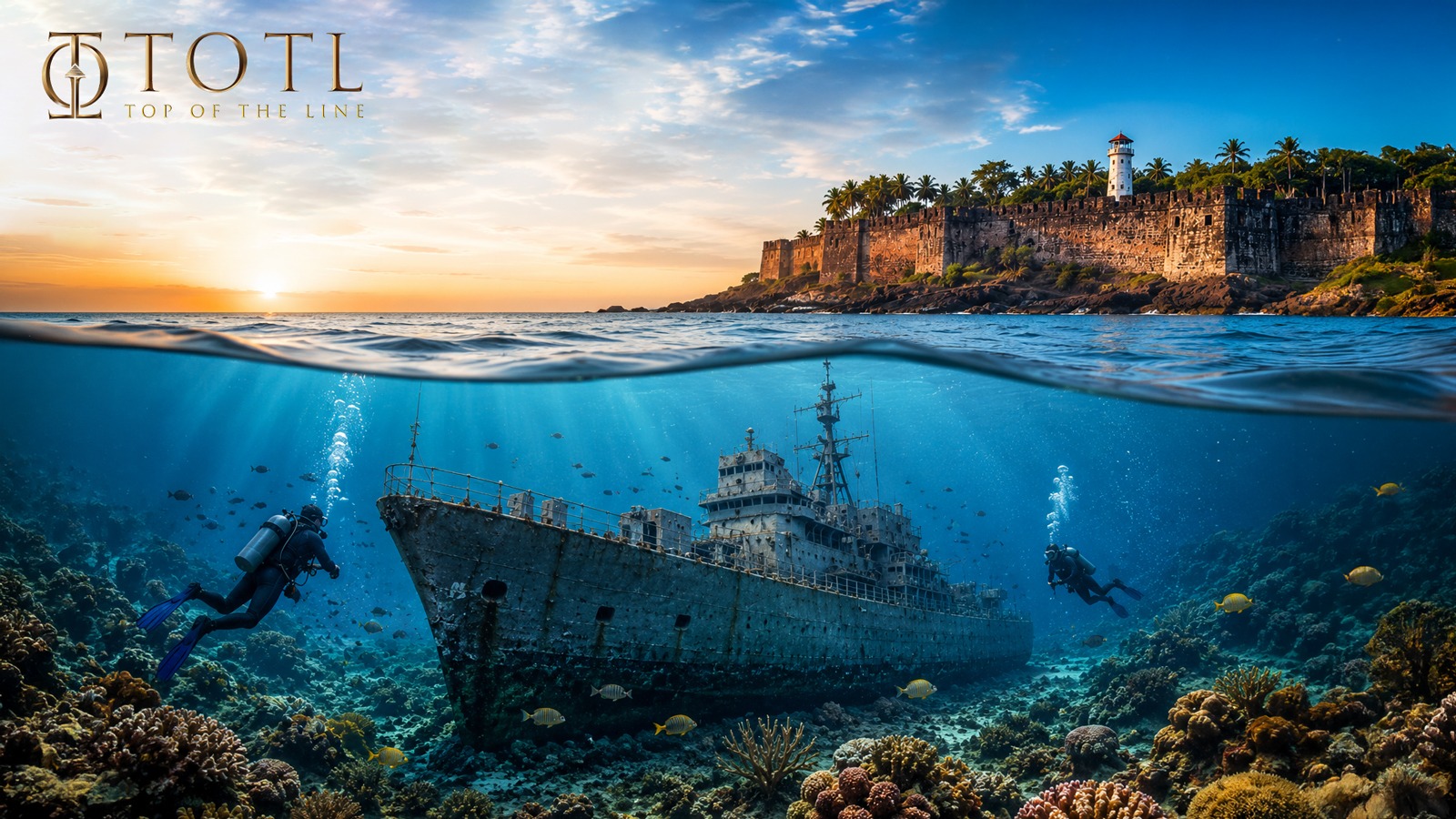
At the heart of this transformation lies the INS Guldar Marine Tourism project, an ambitious initiative that is converting a retired Indian Navy warship into India’s first underwater warship museum and artificial coral reef. More than a tourism attraction, the project represents a strategic convergence of marine tourism, coastal infrastructure, environmental conservation, and regional economic development.
For investors, entrepreneurs, policymakers, tourism stakeholders, and coastal real estate observers, the INS Guldar Marine Tourism project offers valuable insight into how a single landmark development can influence an entire regional economy.
From Naval Service to Tourism Landmark: The Story of INS Guldar
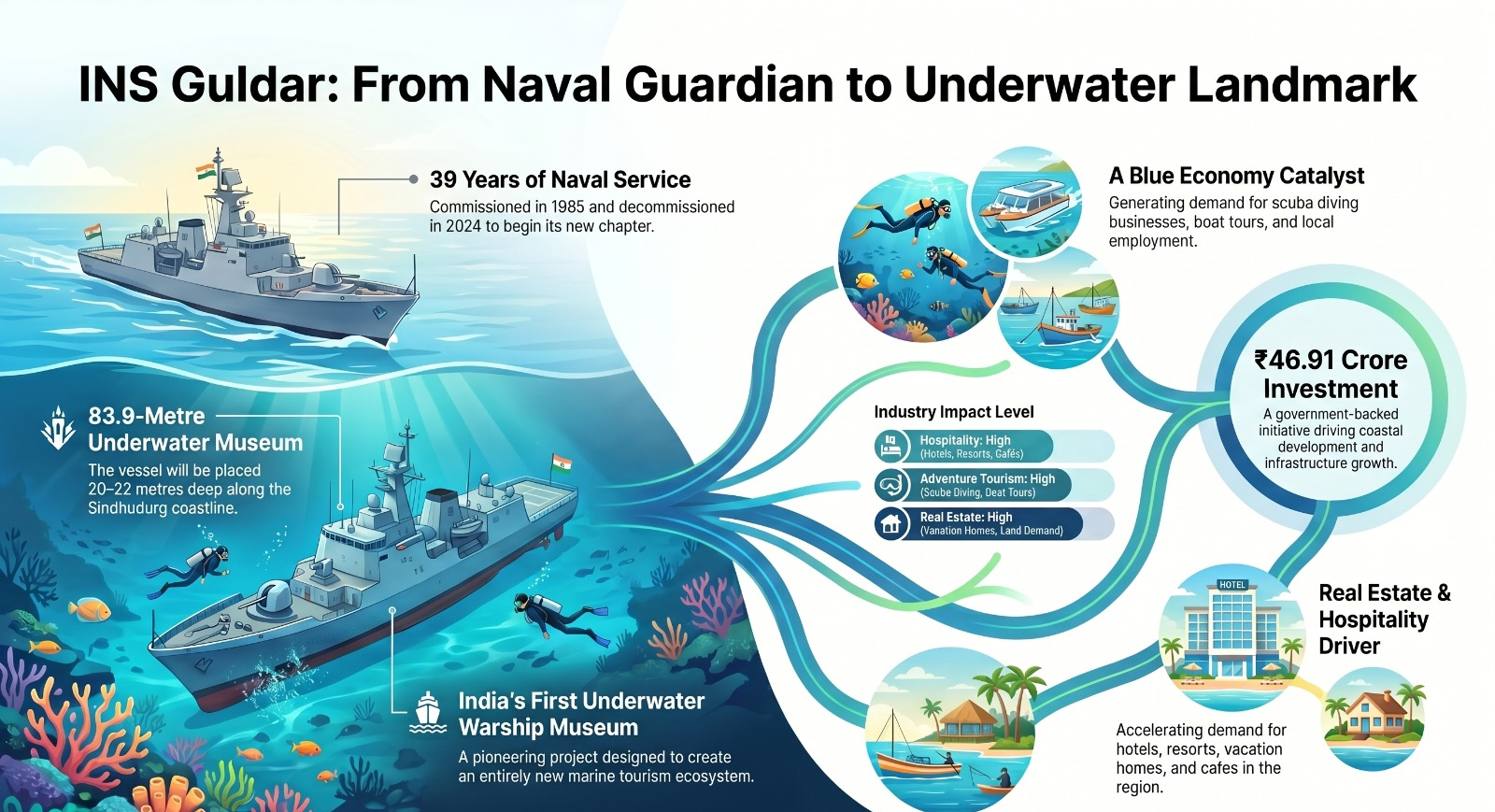
INS Guldar served the Indian Navy for nearly four decades after being commissioned in 1985. Built in Poland and inducted as a Landing Ship Tank (LST), the vessel played a crucial role in amphibious operations, troop transportation, logistics support, and coastal security missions throughout its service life.
After serving the nation for almost 39 years, the vessel was decommissioned in January 2024. While many retired military ships are dismantled for scrap, authorities recognized a unique opportunity to preserve INS Guldar’s legacy while simultaneously creating a new tourism asset for Maharashtra.
The result was the INS Guldar Marine Tourism initiative—an innovative project designed to transform the retired warship into an underwater museum and artificial reef off the Sindhudurg coast.
According to the Ministry of Tourism and Maharashtra Tourism Development Corporation (MTDC), the project received funding support of approximately ₹46.91 crore, highlighting the strategic importance assigned to marine tourism and coastal economic development.
For Sindhudurg, this is not simply a tourism attraction. It is a destination-defining project.
Understanding the INS Guldar Marine Tourism Project
The INS Guldar Marine Tourism project involves the deliberate sinking of the decommissioned warship near Nivati Rock along Sindhudurg’s coastline. Positioned at a depth suitable for marine tourism activities, the vessel is expected to become a major attraction for scuba divers, underwater photographers, marine researchers, and adventure travelers.
Globally, underwater ship museums have proven highly successful in attracting tourism. Some of the most notable examples include:
- USS Oriskany in Florida, USA
- HMAS Swan in Western Australia
- USAT Liberty Wreck in Bali, Indonesia
These destinations have evolved into internationally recognized diving sites that generate substantial tourism revenue annually.
India has largely lacked such iconic underwater tourism experiences. The INS Guldar Marine Tourism project changes that equation and places Sindhudurg on the national marine tourism map.
Beyond tourism, the vessel is expected to function as an artificial reef. Over time, marine organisms, corals, and fish species are likely to colonize the structure, enhancing biodiversity and creating a thriving underwater ecosystem.
More information on India’s tourism development initiatives can be found through the official Ministry of Tourism portal:
Why Sindhudurg Is Perfectly Positioned for Marine Tourism Growth
The success of marine tourism projects depends heavily on geography, environmental quality, accessibility, and supporting infrastructure. Sindhudurg possesses all four advantages.
Located along Maharashtra’s Konkan coastline, Sindhudurg is blessed with approximately 120 kilometers of coastline featuring:
- Pristine beaches
- Rocky islands
- Coral habitats
- Mangrove ecosystems
- Backwaters
- Rich marine biodiversity
The district is already home to several tourism destinations including Tarkarli, Malvan, Devbagh, and Vengurla.
Tarkarli is widely recognized as Maharashtra’s leading scuba diving destination. Malvan attracts thousands of visitors annually for snorkeling, water sports, and heritage tourism centered around the historic Sindhudurg Fort.
However, most tourism in the region has traditionally been beach-oriented.
The INS Guldar Marine Tourism project introduces a completely new category—destination marine tourism.
Instead of simply visiting beaches, tourists will increasingly travel specifically to experience underwater exploration, shipwreck diving, marine ecology, and naval heritage.
This shift from passive tourism to experiential tourism aligns perfectly with global travel trends.
The Maharashtra Tourism Development Corporation continues to actively promote Sindhudurg as a tourism destination.
The Rise of Experiential Tourism and Why It Matters
Modern travelers increasingly prioritize experiences over destinations.
This global trend has transformed tourism markets worldwide. Adventure tourism, eco-tourism, heritage tourism, and marine tourism are growing significantly faster than traditional sightseeing tourism.
The INS Guldar Marine Tourism project fits directly into this trend.
Visitors are no longer satisfied with viewing attractions from a distance. They seek immersive experiences such as:
- Scuba diving
- Marine exploration
- Underwater photography
- Wildlife encounters
- Historical storytelling
- Educational tourism
As India’s middle class expands and international tourism returns to growth, destinations offering unique experiences are expected to outperform conventional beach destinations.
This positions Sindhudurg advantageously within India’s evolving tourism landscape.
Infrastructure Is Creating a New Growth Corridor
Tourism growth rarely occurs in isolation. Infrastructure plays a critical role in determining whether a destination can attract sustained visitor demand.
Sindhudurg has witnessed major infrastructure improvements over the last decade.
Sindhudurg Airport
The operational Sindhudurg Airport has significantly reduced travel time for domestic visitors.
Previously, reaching Sindhudurg often required long road journeys from Mumbai, Pune, or Goa. Improved air connectivity has transformed the district into a practical destination for weekend travelers and second-home owners.
Mopa International Airport
The opening of Manohar International Airport (Mopa Airport) has further accelerated accessibility.
Located near the Maharashtra-Goa border, Mopa Airport effectively extends the tourism influence of North Goa into southern Konkan destinations such as Vengurla and Sindhudurg.
Official airport information can be found here:
National Highway 66
The ongoing modernization of National Highway 66 continues to improve road connectivity between Mumbai, Goa, and the Konkan region.
Improved highways reduce travel times, enhance logistics efficiency, and increase tourism accessibility.
For investors, infrastructure upgrades are often among the strongest indicators of future regional growth.
INS Guldar and the Blue Economy Opportunity
The concept of the Blue Economy has become increasingly important worldwide.
The Blue Economy refers to the sustainable use of ocean resources for economic growth, improved livelihoods, and environmental conservation.
India has identified coastal development and marine economic activities as strategic priorities.
The INS Guldar Marine Tourism project directly contributes to this vision by creating economic value while supporting marine conservation.
Potential Blue Economy benefits include:
- Marine tourism revenue
- Diving industry development
- Boat tourism services
- Marine research opportunities
- Artificial reef ecosystems
- Local employment generation
India’s Blue Economy framework is outlined by:
Economic Impact on Local Communities
One of the most significant aspects of the INS Guldar Marine Tourism project is its potential impact on local communities.
Tourism creates economic ripple effects that extend far beyond visitor spending.
Every tourist generates demand for:
- Accommodation
- Food and beverages
- Transportation
- Recreational activities
- Local retail
- Professional services
As visitor numbers increase, local entrepreneurs gain opportunities to launch businesses such as:
- Dive centers
- Boat charter operations
- Marine adventure companies
- Restaurants
- Cafes
- Homestays
- Boutique hotels
Employment opportunities are expected across multiple sectors.
Marine tourism requires:
- Certified dive instructors
- Boat operators
- Tour guides
- Marine conservation professionals
- Hospitality staff
- Equipment maintenance specialists
These opportunities contribute to income diversification within coastal communities.
Hospitality Sector Growth Potential
Tourism-led destinations often experience significant hospitality expansion.
The INS Guldar Marine Tourism project is expected to strengthen demand for:
Boutique Resorts
Travelers increasingly seek authentic, localized experiences rather than standardized hotels.
Luxury Villas
High-net-worth travelers often prefer privacy, exclusivity, and experiential stays.
Wellness Retreats
The growing wellness tourism market presents opportunities for coastal retreats focused on health, mindfulness, and nature.
Adventure Tourism Accommodation
Marine tourism creates demand for specialized accommodation catering to divers, photographers, and adventure travelers.
Globally, destinations centered around diving attractions often experience longer visitor stays compared to traditional beach tourism.
Longer stays generally translate into higher local spending and stronger tourism economics.
Coastal Real Estate: The Emerging Investment Story
Historically, major tourism developments have influenced real estate demand.
Examples include:
- Goa
- Alibaug
- Gokarna
- Andaman Islands
- Diu
As tourism grows, demand often increases for:
- Vacation homes
- Managed residences
- Holiday rentals
- Hospitality properties
- Commercial tourism infrastructure
Sindhudurg appears to be entering a similar growth phase.
The combination of marine tourism, airport connectivity, improved highways, and growing destination awareness creates conditions that many investors closely monitor.
Particularly noteworthy is the increasing interest among:
- NRIs
- HNIs
- Retirees
- Remote professionals
- Lifestyle investors
Many buyers are seeking destinations that combine natural beauty, lower density, lifestyle appeal, and long-term appreciation potential.
Coastal Maharashtra increasingly meets these criteria.
Lessons from Goa’s Growth Story
Goa offers valuable lessons for investors evaluating Sindhudurg.
Several decades ago, many of Goa’s now-premium coastal areas were relatively unknown outside regional tourism circles.
As infrastructure improved and tourism expanded, property values increased significantly.
While Sindhudurg should not be viewed as a direct replica of Goa, several similarities exist:
- Coastal geography
- Tourism-led growth
- Airport connectivity
- Lifestyle migration trends
- Hospitality expansion
The key difference is timing.
Sindhudurg remains at a much earlier stage of development.
For long-term investors, early-stage growth corridors often offer the greatest opportunities.
Comparing Sindhudurg with India’s Coastal Tourism Destinations
Goa
Strengths:
- Mature tourism ecosystem
- International visibility
Challenges:
- Higher land prices
- Increased density
Andaman Islands
Strengths:
- World-class diving
Challenges:
- Limited accessibility
Lakshadweep
Strengths:
- Exceptional marine ecosystems
Challenges:
- Restricted development
Gokarna
Strengths:
- Growing tourism appeal
Challenges:
- Infrastructure still developing
Sindhudurg
Strengths:
- Airport connectivity
- Marine tourism expansion
- Relatively lower density
- Strong infrastructure pipeline
- INS Guldar Marine Tourism project
This combination creates a unique value proposition.
Future Growth Outlook Toward 2035
Several trends suggest that Sindhudurg may experience sustained growth over the next decade.
Tourism Diversification
Beyond beaches, tourism products will likely expand into:
- Marine tourism
- Heritage tourism
- Wellness tourism
- Eco-tourism
- Adventure tourism
Hospitality Expansion
Demand for high-quality accommodation is expected to increase alongside visitor growth.
Coastal Infrastructure Development
Continued investment in transportation and tourism infrastructure will likely enhance accessibility.
Real Estate Demand
Tourism-driven destinations often attract second-home buyers and long-term investors.
Blue Economy Development
Marine tourism projects such as INS Guldar may serve as anchors for broader coastal economic activity.
FAQ
1. What is the INS Guldar Marine Tourism Project?
The INS Guldar Marine Tourism project is India’s first underwater warship museum initiative. The decommissioned Indian Navy vessel INS Guldar has been intentionally submerged off the Sindhudurg coast to create an underwater attraction for scuba divers, marine enthusiasts, researchers, and tourists.
The project is also designed to function as an artificial coral reef, supporting marine biodiversity while promoting sustainable tourism and coastal economic development.
2. Why is the INS Guldar Marine Tourism Project Important for Sindhudurg?
The INS Guldar Marine Tourism project is expected to become a landmark attraction capable of drawing visitors from across India and internationally.
Historically, destinations that develop unique tourism assets often experience growth in:
- Hospitality demand
- Tourism infrastructure
- Local employment
- Coastal real estate
- Small business development
For Sindhudurg, the project represents a significant opportunity to diversify beyond traditional beach tourism and establish itself as a marine adventure tourism destination.
3. Where Is INS Guldar Located and How Can Tourists Access It?
The INS Guldar underwater museum is located near Nivati Rock along the Sindhudurg coastline in Maharashtra.
Tourists can access the region through:
- Sindhudurg Airport
- Manohar International Airport (Mopa)
- National Highway 66
- Konkan Railway
The improving connectivity infrastructure is one of the reasons why the INS Guldar Marine Tourism project is attracting attention from tourism planners and investors alike.
Airport Information:
Manohar International Airport (Mopa)
4. How Will INS Guldar Marine Tourism Benefit the Local Economy?
The economic impact of INS Guldar Marine Tourism extends far beyond tourism alone.
Increased visitor arrivals can stimulate growth in:
- Hotels and resorts
- Homestays
- Restaurants
- Transport services
- Diving schools
- Boat charter businesses
- Retail and local markets
Tourism economists often refer to this as the “multiplier effect,” where every tourism rupee circulates through multiple sectors of the economy.
Blue Economy Insights:
5. How Does INS Guldar Marine Tourism Support Marine Conservation?
One of the most unique aspects of the INS Guldar Marine Tourism project is its environmental contribution.
The submerged vessel is expected to function as an artificial reef. Over time, marine organisms, corals, and fish species can colonize the structure, creating new underwater habitats.
Globally, artificial reef projects have been used to:
- Enhance biodiversity
- Support marine ecosystems
- Reduce pressure on natural reefs
- Encourage eco-tourism
This makes INS Guldar both a tourism asset and a conservation initiative.
Marine Conservation Reference:
6. Can INS Guldar Marine Tourism Increase Coastal Property Values in Sindhudurg?
While property appreciation depends on several factors, tourism-led destinations often experience increased demand for:
- Vacation homes
- Second residences
- Managed holiday properties
- Hospitality developments
- Commercial tourism spaces
As the INS Guldar Marine Tourism project enhances Sindhudurg’s visibility and attracts more visitors, the surrounding coastal ecosystem may benefit from increased investment interest.
This pattern has historically been observed in destinations such as Goa, Alibaug, and parts of the Andaman Islands.
7. How Does Sindhudurg Compare with Goa as a Tourism and Investment Destination?
Goa is a mature tourism market with strong international recognition. Sindhudurg, on the other hand, is still in an emerging growth phase.
The INS Guldar Marine Tourism project provides Sindhudurg with a unique attraction that currently has no equivalent elsewhere in India.
Some advantages of Sindhudurg include:
- Lower development density
- Cleaner and less crowded beaches
- Emerging tourism infrastructure
- Growing airport connectivity
- Strong long-term growth potential
For investors, emerging destinations often present opportunities before markets become saturated.
8. What Business Opportunities Could Emerge Around INS Guldar Marine Tourism?
The growth of INS Guldar Marine Tourism could create opportunities across multiple sectors.
Potential opportunities include:
- Scuba diving academies
- Marine adventure companies
- Waterfront dining concepts
- Boutique resorts
- Wellness retreats
- Tourism transportation services
- Equipment rental businesses
- Coastal hospitality projects
As visitor numbers increase, demand for supporting services typically rises alongside tourism activity.
9. What Role Does the Blue Economy Play in the Future of Sindhudurg?
The Blue Economy focuses on the sustainable use of ocean resources to support economic growth while protecting marine ecosystems.
The INS Guldar Marine Tourism initiative aligns closely with India’s Blue Economy vision by combining:
- Tourism development
- Marine conservation
- Coastal employment generation
- Sustainable economic activity
As coastal districts increasingly adopt Blue Economy strategies, Sindhudurg may emerge as an important case study in balancing development with environmental stewardship.
10. What Is the Long-Term Outlook for INS Guldar Marine Tourism and Sindhudurg?
The long-term outlook for INS Guldar Marine Tourism appears promising due to several converging trends:
- Growing domestic tourism demand
- Increasing interest in experiential travel
- Airport-led regional development
- Coastal infrastructure investments
- Rising second-home demand
- Government focus on maritime tourism
- Expansion of India’s Blue Economy
If these trends continue, Sindhudurg could evolve into one of India’s most significant marine tourism destinations over the next decade.
The INS Guldar project may ultimately become the anchor attraction that accelerates broader tourism, hospitality, and investment activity across the Konkan coast.
What Investors Should Watch Closely
The INS Guldar Marine Tourism project should be viewed within a broader regional context.
Investors should monitor:
- Tourism arrival growth
- Airport passenger traffic
- Hospitality occupancy rates
- Infrastructure investments
- Marine tourism adoption
- Coastal real estate transactions
- Government tourism initiatives
Rather than focusing solely on the underwater museum itself, investors should evaluate the ecosystem developing around it.
The most significant opportunities often emerge from supporting infrastructure rather than the headline attraction.
More Than a Tourism Attraction
The INS Guldar Marine Tourism project represents far more than the conversion of a retired naval vessel.
It symbolizes the emergence of a new tourism and economic narrative for Sindhudurg.
By combining naval heritage, marine conservation, tourism innovation, infrastructure development, and Blue Economy principles, the project has the potential to reshape how the region is perceived by travelers, investors, and policymakers.
For tourism stakeholders, it introduces a new category of destination attraction.
For local communities, it creates opportunities for employment and entrepreneurship.
For policymakers, it demonstrates how heritage assets can be repurposed to support regional development.
For investors, it offers an early glimpse into a coastal growth corridor that is increasingly benefiting from tourism expansion, improved connectivity, and rising destination visibility.
As India’s coastal economy continues to evolve, the INS Guldar Marine Tourism project may ultimately be remembered not merely as an underwater museum, but as the catalyst that accelerated Sindhudurg’s transformation into one of the country’s most promising marine tourism and coastal investment destinations.