The Rise of Experience-Led Destinations: Why Vengurla Is Emerging as India’s Next Coastal Growth Story
Tourism Is No Longer About Places—It’s About Experiences
For decades, tourism was largely defined by destinations, landmarks, and itineraries. Travelers planned vacations around famous beaches, monuments, shopping districts, and sightseeing attractions. Today, however, the global travel industry is experiencing a profound transformation. The most valuable destinations are no longer those with the biggest attractions; they are the ones that offer the most meaningful experiences.
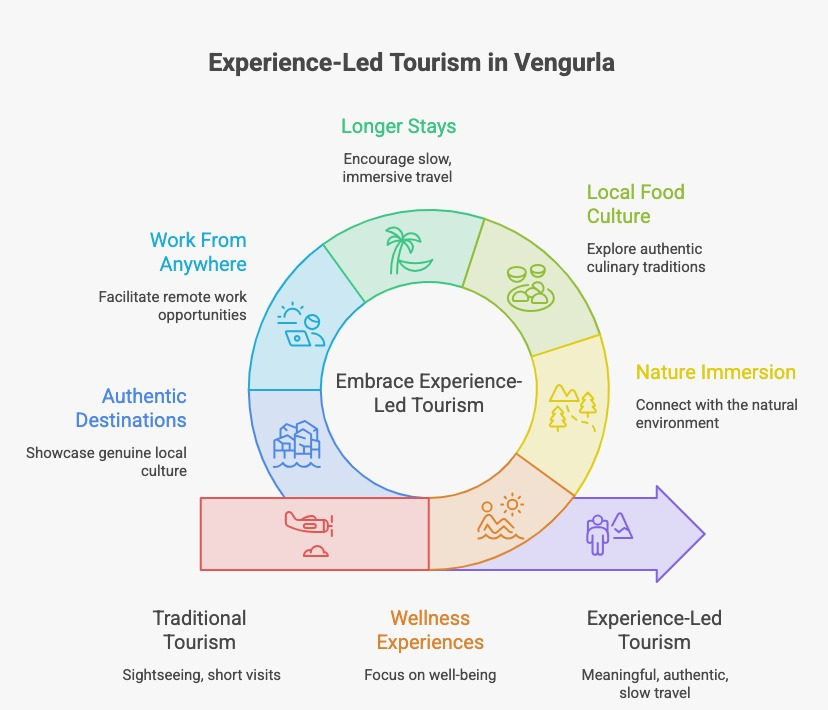
This shift has given rise to what industry experts call Experience-Led Tourism in Vengurla and similar emerging destinations worldwide. Travelers increasingly seek authenticity, wellness, nature, local culture, sustainability, and deeper emotional connections with places they visit.
According to the World Travel & Tourism Council (WTTC), nature-based tourism now accounts for a significant portion of global travel demand, while wellness tourism continues to grow faster than traditional tourism segments. Similarly, the Global Wellness Institute projects the wellness tourism market to exceed $2 trillion over the next decade.
Against this backdrop, India’s coastal landscape is evolving. While traditional tourism hubs continue to attract visitors, emerging destinations are capturing attention for a different reason: they provide experiences that modern travelers increasingly value.
Among these emerging destinations, Experience-Led Tourism in Vengurla stands out as a compelling example of how nature, culture, infrastructure, and lifestyle trends can converge to create long-term tourism and economic potential.
The Global Shift Toward the Experience Economy
The concept of the Experience Economy was introduced by economists B. Joseph Pine II and James Gilmore, who argued that experiences would become the next stage of economic value creation after goods and services.
In tourism, this prediction has become reality.
Travelers today are seeking:
- Cultural immersion
- Local culinary experiences
- Wellness retreats
- Eco-tourism
- Slow travel
- Adventure experiences
- Nature-based living
- Community engagement
According to the Global Wellness Institute:
Wellness tourism is expected to grow substantially faster than traditional tourism over the coming decade.
Similarly, the WTTC highlights the growing importance of sustainable and nature-driven travel experiences.
The implications are significant. Travelers are no longer simply visiting destinations; they are choosing lifestyles, environments, and experiences.
This evolution creates opportunities for regions that possess natural beauty, cultural authenticity, and lower-density environments—qualities increasingly associated with Experience-Led Tourism in Vengurla.
The New Traveler Is Redefining Tourism Demand
One of the most important drivers behind Experience-Led Tourism in Vengurla is the changing behavior of travelers themselves.
Millennials and Gen Z Travelers
Millennials and Gen Z travelers increasingly prioritize:
- Authentic experiences
- Sustainability
- Local engagement
- Wellness
- Responsible travel
- Offbeat destinations
Research from global travel platforms consistently shows that younger travelers often value unique experiences more than luxury amenities alone.
Remote Workers and Digital Nomads
The rise of flexible work has changed travel patterns dramatically.
Many professionals now combine:
- Work
- Leisure
- Wellness
- Extended stays
Instead of taking short vacations, travelers increasingly spend weeks or months in destinations that offer better quality of life.
High-Net-Worth Individuals and Family Offices
Affluent travelers and investors are increasingly drawn toward:
- Privacy
- Space
- Nature
- Wellness-focused environments
- Low-density destinations
These preferences are contributing to rising interest in emerging coastal regions where lifestyle and investment considerations intersect.
This broader shift is one of the strongest arguments supporting the growth of Experience-Led Tourism in Vengurla.
Why Experience-Led Tourism Creates New Destination Winners
Historically, tourism growth has concentrated around a small number of major destinations.
Today, travelers are actively diversifying where they go.
Several factors are driving this change:
Desire for Authenticity
Travelers increasingly want to experience:
- Local traditions
- Regional cuisines
- Indigenous cultures
- Community-driven experiences
Search for Wellness
The modern traveler often seeks destinations that support:
- Mental well-being
- Physical health
- Nature immersion
- Digital detoxification
Sustainability Concerns
Environmental awareness is influencing destination choices more than ever before.
Travelers increasingly prefer destinations that preserve:
- Natural ecosystems
- Biodiversity
- Local culture
- Community integrity
These trends collectively favor destinations that remain relatively untouched and naturally rich—precisely the conditions supporting Experience-Led Tourism in Vengurla.
Understanding Vengurla’s Natural Advantage
Located in Maharashtra’s Sindhudurg district, Vengurla possesses a unique combination of assets that align with emerging tourism trends.
Pristine Coastline
Vengurla is known for:
- Scenic beaches
- Coastal landscapes
- Arabian Sea views
- Relatively low-density development
Its beaches offer an environment increasingly valued by travelers seeking quieter coastal experiences.
Rich Biodiversity
The broader Sindhudurg region supports:
- Mangrove ecosystems
- Marine biodiversity
- Coastal forests
- Diverse birdlife
As eco-tourism gains momentum globally, these environmental assets become increasingly valuable.
Cultural Authenticity
The region preserves:
- Konkani traditions
- Malvani cuisine
- Fishing heritage
- Local festivals
Authenticity has become one of tourism’s most sought-after qualities, making cultural richness an important competitive advantage.
Together, these factors strengthen the foundation of Experience-Led Tourism in Vengurla.
The Rise of Slow Travel and Why Vengurla Fits Perfectly
One of the fastest-growing travel movements globally is slow travel.
Unlike traditional tourism, slow travel encourages:
- Longer stays
- Deeper engagement
- Reduced travel frequency
- Meaningful local experiences
Travelers increasingly prefer spending more time in fewer destinations rather than rushing through multiple locations.
Vengurla naturally supports this travel style through:
- Peaceful surroundings
- Walkable coastal environments
- Local food culture
- Nature-focused activities
- Relaxed pace of life
For many travelers, these characteristics are becoming more valuable than crowded entertainment districts or heavily commercialized tourism zones.
As slow travel expands globally, Experience-Led Tourism in Vengurla becomes increasingly relevant.
Infrastructure Is Accelerating Regional Transformation
Tourism growth rarely happens in isolation.
Infrastructure often serves as the catalyst that unlocks a destination’s potential.
Mopa International Airport
The development of the airport has significantly improved accessibility to the broader coastal belt surrounding Vengurla.
Improved air connectivity enhances:
- Tourist arrivals
- Business travel
- International visibility
- Investment interest
Mumbai-Goa Highway Upgrades
The modernization of NH-66 is expected to improve regional mobility substantially.
Improved road infrastructure typically contributes to:
- Tourism growth
- Logistics efficiency
- Economic activity
- Real estate demand
Digital Connectivity
Remote work trends make reliable internet infrastructure increasingly important.
Regions capable of supporting work-from-anywhere lifestyles gain an additional competitive advantage.
Collectively, these infrastructure developments strengthen the long-term outlook for Experience-Led Tourism in Vengurla.
Tourism Growth and Lifestyle Migration Are Becoming Interconnected
A significant global trend influencing real estate markets is lifestyle migration.
Increasingly, people are choosing where they live based on:
- Quality of life
- Climate
- Natural surroundings
- Wellness opportunities
- Community experiences
This trend accelerated after the pandemic and continues to influence both travel and residential decisions.
Many individuals now seek destinations where they can:
- Vacation
- Work remotely
- Retire
- Own second homes
This convergence creates a powerful relationship between tourism and residential demand.
As destinations gain popularity through tourism experiences, they often attract long-term residents and second-home buyers.
This dynamic is increasingly visible within the broader ecosystem of Experience-Led Tourism in Vengurla.
Why Investors Are Paying Attention to Destination-Led Growth
Sophisticated investors increasingly monitor tourism indicators when evaluating regional growth opportunities.
Several indicators often precede long-term economic expansion:
Tourism Arrivals
Increasing visitor numbers frequently support:
- Hospitality growth
- Infrastructure investment
- Employment generation
Accessibility Improvements
Airports, highways, and digital infrastructure often influence destination competitiveness.
Hospitality Development
Growth in:
- Boutique stays
- Resorts
- Wellness retreats
- Managed residences
can signal increasing tourism maturity.
Lifestyle Demand
When destinations begin attracting repeat visitors and second-home buyers, they often enter a new stage of development.
These indicators help explain why Experience-Led Tourism in Vengurla is attracting growing attention among investors, business leaders, and destination analysts.
Sustainable Tourism and Long-Term Regional Growth
One of the most important lessons from global tourism development is that sustainability matters.
Rapid growth without environmental stewardship can undermine long-term destination value.
The most resilient destinations typically focus on:
- Conservation
- Responsible tourism
- Environmental protection
- Community participation
Organizations such as UN Tourism continue to emphasize sustainable tourism as a key driver of future growth.
Vengurla’s natural assets create an opportunity to pursue tourism growth while maintaining environmental integrity.
This balance is increasingly important to both travelers and investors.
FAQ
FAQ 1: What is Experience-Led Tourism in Vengurla and why is it gaining attention?
Experience-Led Tourism in Vengurla refers to a travel trend where visitors seek authentic experiences rather than traditional sightseeing alone. Instead of focusing only on attractions, travelers increasingly prioritize local culture, wellness, nature immersion, coastal lifestyles, regional cuisine, and meaningful interactions with destinations. Vengurla’s pristine beaches, Malvani heritage, biodiversity, and relaxed pace of life align closely with this global shift toward experience-driven travel.
FAQ 2: Why is Experience-Led Tourism in Vengurla relevant for long-term tourism growth?
Global tourism research shows travelers are increasingly choosing destinations that offer wellness, sustainability, cultural authenticity, and nature-based experiences. Experience-Led Tourism in Vengurla benefits from these trends because the region naturally provides coastal landscapes, biodiversity, local traditions, and lower-density tourism environments that modern travelers actively seek.
FAQ 3: How does wellness tourism support Experience-Led Tourism in Vengurla?
Wellness tourism is one of the fastest-growing segments of the global travel industry. Travelers increasingly seek destinations that promote physical health, mental well-being, relaxation, and connection with nature. Vengurla’s clean environment, coastal setting, fresh seafood culture, and slower pace of life position it well within the broader wellness tourism movement.
FAQ 4: What role does slow travel play in Experience-Led Tourism in Vengurla?
Slow travel encourages visitors to spend more time in fewer destinations while engaging more deeply with local communities, culture, and nature. Experience-Led Tourism in Vengurla naturally complements slow travel because travelers can explore beaches, fishing villages, local cuisine, biodiversity, and cultural traditions without the rush associated with heavily commercialized tourist destinations.
FAQ 5: How is infrastructure improving the future of Experience-Led Tourism in Vengurla?
Infrastructure improvements such as the expansion of NH-66 and enhanced regional accessibility through Manohar International Airport (Mopa) are strengthening tourism connectivity across the Konkan region. Better transportation networks typically increase visitor accessibility, support hospitality growth, and enhance the long-term viability of emerging tourism destinations like Vengurla.
FAQ 6: Why are millennials and Gen Z travelers driving Experience-Led Tourism in Vengurla?
Millennials and Gen Z travelers increasingly prioritize experiences over possessions. Research indicates they value authenticity, sustainability, local food, nature-based activities, and offbeat destinations. Experience-Led Tourism in Vengurla aligns with these preferences through its cultural heritage, coastal environment, local experiences, and relatively undiscovered character.
FAQ 7: How does Experience-Led Tourism in Vengurla influence second-home demand?
Globally, many destinations first attract visitors and later attract second-home buyers. Travelers who develop emotional connections with a location often seek longer stays, lifestyle investments, or vacation homes. Experience-Led Tourism in Vengurla can contribute to this trend by encouraging repeat visitation and stronger destination attachment among travelers seeking coastal living experiences.
FAQ 8: What makes Vengurla suitable for sustainable tourism development?
Sustainable tourism focuses on balancing economic growth, environmental protection, and community well-being. Vengurla’s biodiversity, mangrove ecosystems, marine resources, and cultural heritage provide a strong foundation for responsible tourism development. Preserving these assets is critical for ensuring the long-term success of Experience-Led Tourism in Vengurla.
FAQ 9: How does Experience-Led Tourism in Vengurla contribute to regional economic development?
Tourism generates economic benefits that extend beyond hospitality. Experience-Led Tourism in Vengurla can support local employment, entrepreneurship, food and beverage businesses, transportation services, cultural enterprises, and tourism-related infrastructure. Well-managed tourism growth often creates a multiplier effect across regional economies.
FAQ 10: Why is Experience-Led Tourism in Vengurla being viewed as a future destination trend?
The future of tourism is increasingly centered around authenticity, wellness, sustainability, and meaningful travel experiences. Experience-Led Tourism in Vengurla aligns with all four of these global trends. As travelers continue seeking nature-rich, culturally authentic, and less crowded destinations, regions like Vengurla are becoming increasingly relevant within India’s evolving tourism landscape.
The Future of Tourism Is Experience-Led
The tourism industry is entering a new era.
Travel decisions are increasingly shaped by:
- Authenticity
- Wellness
- Sustainability
- Nature
- Community
- Meaningful experiences
The destinations that thrive over the coming decades are likely to be those that align with these priorities.
The rise of Experience-Led Tourism in Vengurla reflects broader global shifts rather than short-term trends. The region combines many of the characteristics now driving tourism demand worldwide: natural beauty, cultural richness, biodiversity, improving infrastructure, and a lifestyle-oriented environment.
For policymakers, investors, family offices, second-home buyers, and business leaders, understanding these tourism transformations is becoming increasingly important.
As the experience economy continues to reshape travel behavior, destinations capable of delivering authentic, nature-rich, and meaningful experiences may emerge as some of the most significant regional growth stories of the coming decade.
Vengurla appears well-positioned to participate in that future—not because of speculation or hype, but because it aligns with the structural forces redefining how people travel, live, and invest in the twenty-first century.